
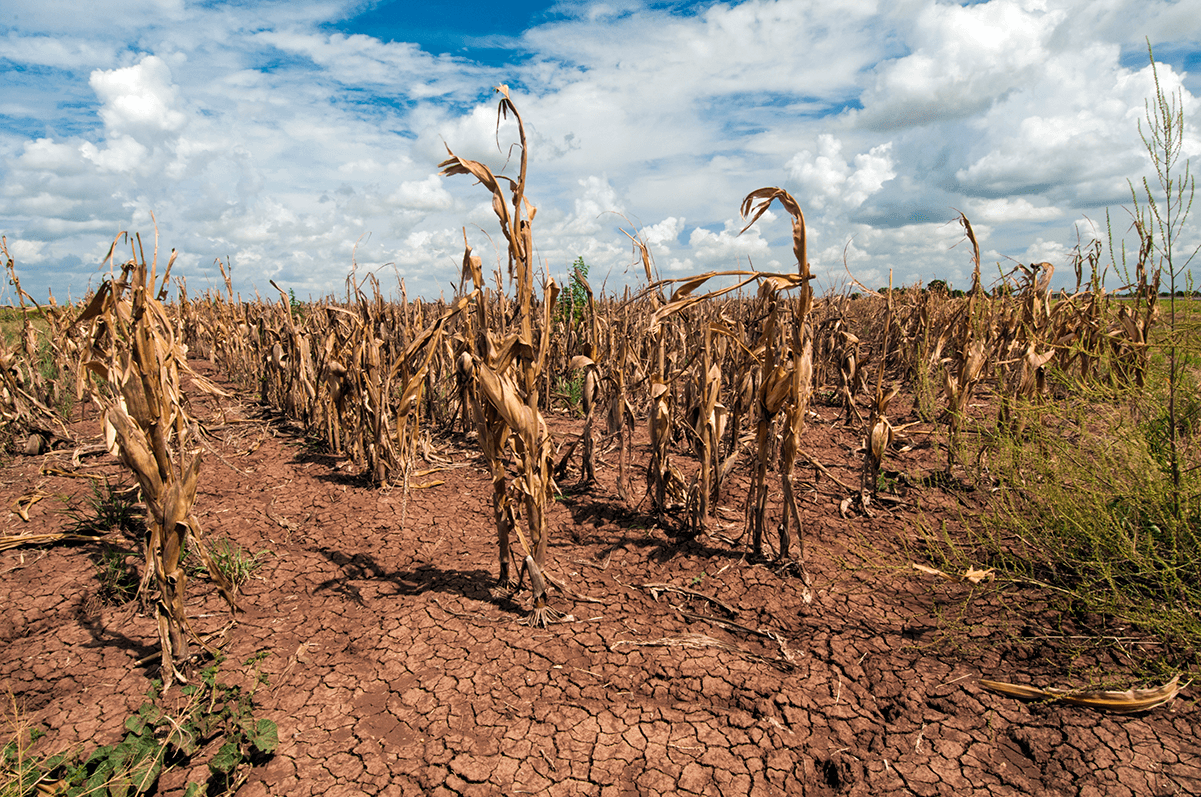
Most people think climate change is about rising temperatures or melting glaciers. But its biggest impact may be much closer to home—the food on your dining table.
Climate change is already disrupting rainfall patterns. Some regions are experiencing long droughts, while others are facing intense cloudbursts and floods within just a few hours. Both extremes have one thing in common: they threaten agriculture.
When there is too little rain, crops dry up because farmers don't have enough water for irrigation. When there is too much rain, fields are flooded, crops are destroyed, and fertile soil is washed away. Either way, food production suffers.
This is why every country must prepare for a future where rainfall is becoming less predictable.
One of the most effective steps is to restore the storage capacity of our natural and man-made water bodies. Lakes, ponds, rivers, reservoirs and dams gradually lose their capacity because of silt accumulation. Desilting them allows these water bodies to hold much more water.
The benefits are significant.
During heavy rainfall or cloudbursts, excess water can flow into these water bodies instead of flooding farms and nearby communities. The water is safely stored instead of being lost as destructive runoff.
That stored water then becomes a lifeline during future droughts. If the next monsoon is weak, farmers can continue irrigating their crops using water stored from previous seasons. Building enough storage to support one, two or even three years of uncertain rainfall can greatly improve resilience against climate change.
For rural India, water security means livelihood security. For cities, it means food security.
The connection is simple.
No water for farmers means no food for cities.
Climate change cannot be stopped overnight, but we can prepare for it. Investing in healthy rivers, lakes, ponds and reservoirs is not just about conserving water—it is about protecting agriculture, strengthening food security and ensuring that future generations continue to have food on their tables.
Because in the end, water security is food security, and food security is national security.